Diplomacy, decoded. No spin. No fluff. Just the bite.
Briefings. Signals. Clues.
Because diplomacy rarely leaves fingerprints but always leaves traces.
The Art of Not Saying It
Diplomacy often advances through carefully chosen words — and deliberate omissions. From the Shanghai Communiqué to contemporary disputes over Canada and Nicaragua, Christopher Angel examines when strategic ambiguity creates room for agreement and when silence becomes a convenient substitute for political responsibility.
For many countries, the choice between Washington and Beijing is a question they never asked. Christopher Ángel examines how the search for a “third way” can still trap states inside a framework imposed by others.
What happens when machines begin writing the reports that other machines are asked to read? A diplomat reflects on AI, the disappearing cost of language, and what may be lost when human attention is no longer visible in the words.
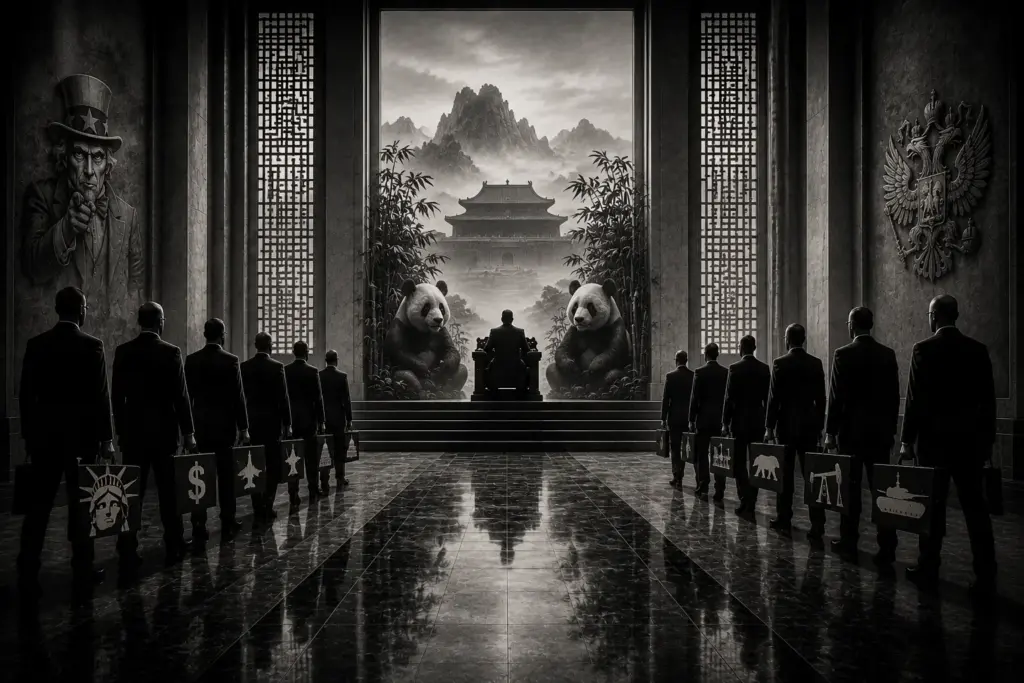
Trump arrived with CEOs and requests. Putin arrived with dependency and caution. Xi Jinping stayed exactly where he was. In diplomacy, movement matters — and Beijing is beginning to look less like a destination and more like the centre of geopolitical gravity itself.
The modern international system increasingly survives not through resolution, but through calibrated incompleteness. From Taiwan to Ukraine and the Strait of Hormuz, governments preserve stability by refusing to define realities too clearly.
India is not neutral. It is structurally present — buying Russian oil, securing Hormuz, and maintaining leverage across rivals. Europe calls this neutrality. India calls it foreign policy.
The Strait of Hormuz is not closed. It is being filtered. Who passes is determined by designation, not geography. That is not the language of a closed war port. It is the language of controlled access — and it did not begin on 28 February.
Beijing condemned loudly, announced a special envoy, evacuated its citizens. Then it waited. The condemnations are the furniture. The silence is the architecture — and it is saying something very specific.
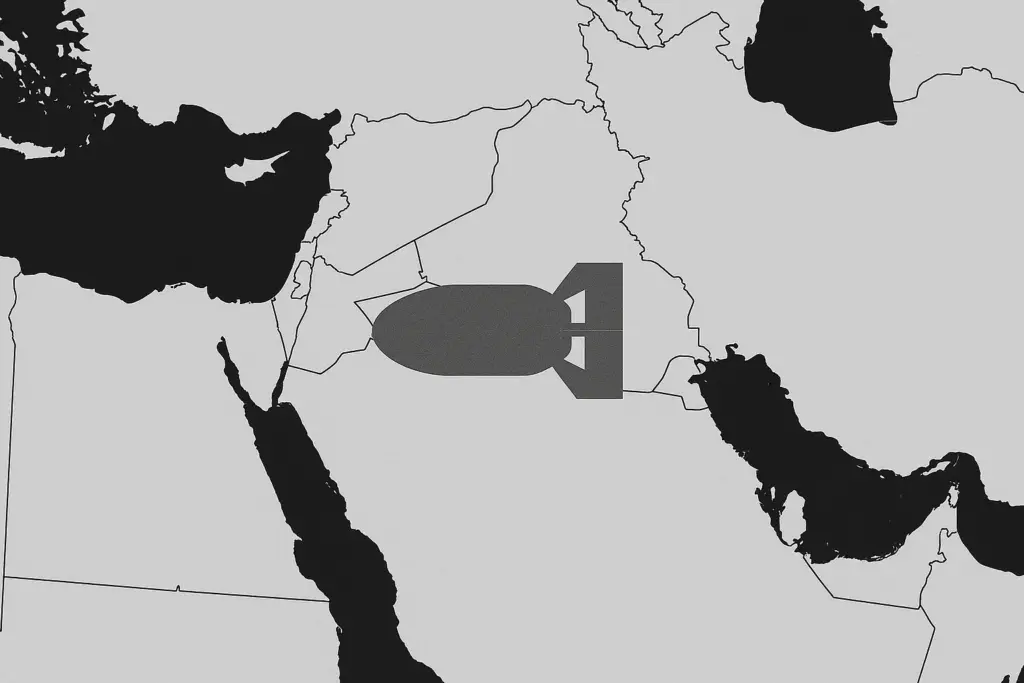
The architecture of power remains. The architect does not. Five days after the strikes, the succession question is open, the diplomatic infrastructure is gone, and the three conditions for successful regime change are still absent.
Oman announced progress within hours of the strikes. By morning, Tehran was burning. A colleague told me the lessons of the past have become meaningless. He is half right — which makes him dangerously wrong.